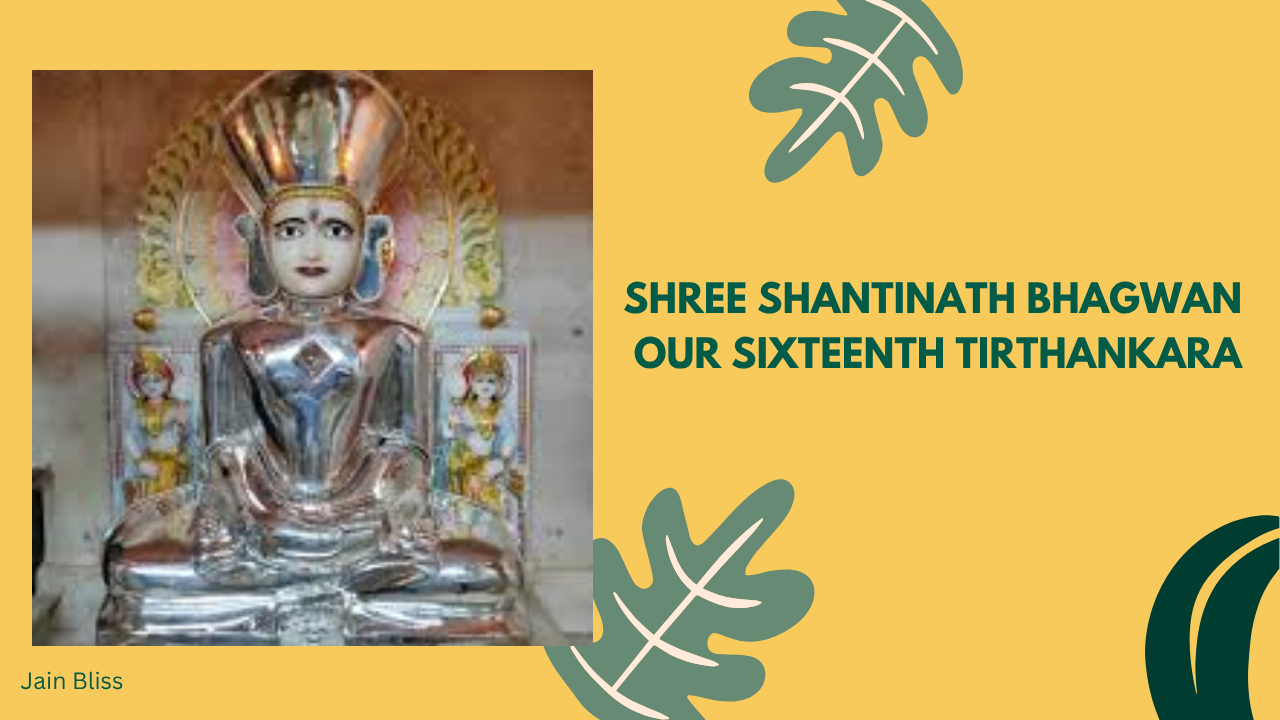
Shree Shantinatha Bhagwan – The Sixteenth Tirthankara
Shree Shantinatha Bhagwan, the 16th Tirthankara of Jainism, is revered as the Lord of Peace for his message of non-violence, compassion, and spiritual discipline. His life reflects a perfect balance of royal duties, renunciation, deep meditation, and ultimate liberation (Moksha).
Birth and Lineage
-
Parents: King Vishvasena and Queen Achira Devi
-
Dynasty: Ikshvaku
-
Birthplace: Hastinapur (Uttar Pradesh, India)
-
Birth Date: 13th day of the bright half of Jyeshtha month
-
Symbol (Lanchhan): Deer (antelope)
-
Yaksha: Kimpurusha
-
Yakshini: Mahamanasi Devi
-
Sacred Tree: Nandi Tree
-
Complexion: Golden
-
Height: 40 Dhanush (approx. 120 meters)
-
Lifespan: 100,000 years
His birth was considered auspicious, as peace and prosperity spread across the kingdom. Even wild animals became calm, signifying his divine influence.
Childhood and Royal Life
As a young prince, Shantinath displayed wisdom, gentleness, and compassion. At age 25, he became a Chakravarti (Universal Monarch), ruling with justice and compassion. His reign was marked by prosperity, non-violence, and ethical governance, ensuring peace for all beings.
The Five Kalyanaks (Auspicious Events)
-
Chyavan Kalyanak (Conception): Queen Achira experienced divine dreams foretelling his greatness.
-
Janma Kalyanak (Birth): His birth brought harmony and joy to Hastinapur.
-
Diksha Kalyanak (Renunciation): At age 50, he renounced his throne, choosing the path of asceticism.
-
Kevalgyan Kalyanak (Omniscience): Through deep meditation and penance, he attained Keval Gyan (Omniscience).
-
Nirvana Kalyanak (Liberation):He attained Moksha atSammed Shikharji, achieving eternal peace.
Teachings and Philosophy
-
Peace and Non-violence (Ahimsa): Advocated living in harmony with all beings.
-
Compassion: Urged followers to treat even animals and insects with kindness.
-
Renunciation: True happiness comes from detachment from worldly pleasures.
-
Equality: His sermons in the Samavasaran (divine assembly) were understood by all beings — humans, animals, and celestial beings alike.
-
Spiritual Discipline:He taught overcoming passions (anger, pride, deceit, greed) as the way to Moksha.
Symbolism – The Deer
The Deer (Mriga) is his symbol, representing gentleness, peace, compassion, and serenity. Just as a deer moves gracefully and harmlessly in the forest, Shree Shantinath Bhagwan’s teachings guide souls toward peaceful living and spiritual awakening.
Hidden and Lesser-Known Facts
-
He was the first Tirthankara to be born with three types of knowledge:
-
Mati Gyan (sensory knowledge)
-
Shrut Gyan (scriptural knowledge)
-
Avadhi Gyan (clairvoyance)
-
-
He was both a Tirthankara and a Chakravarti — a rare honor in Jain tradition.
-
His Samavasaran was attended by humans, devas, and even wild animals, who listened peacefully to his sermons.
-
Legends say that even wild beasts calmed down in his presence.
- His reign as Chakravarti lasted for more than 25,000 years, marked by justice and peace.
Nirvana (Moksha)
-
Place: Sammed Shikharji, Jharkhand
- Attainment: After years of penance, he achieved Moksha, ending the cycle of birth and death.
Frequently Asked Questions (FAQs)
Q1. Who was Shree Shantinatha Bhagwan?
👉 He was the 16th Tirthankara of Jainism, known as the “Lord of Peace,” who taught non-violence, compassion, and self-discipline.
Q2. What is his symbol and its meaning? 👉 His symbol is the Deer, representing peace, gentleness, and compassion.
Q3. Where was he born? 👉 He was born in Hastinapur (Uttar Pradesh, India) to King Vishvasena and Queen Achira Devi.
Q4. What was his color and height according to Jain texts? 👉 He had a golden complexion and a height of 40 Dhanush (120 meters).
Q5. How long did he live? 👉 He lived for 100,000 years, according to Jain scriptures.
Q6. Where did he attain Nirvana? 👉 Shree Shantinatha Bhagwan attained Nirvana at Sammed Shikharji.
Q7. Did he rule as a Chakravarti? 👉 Yes, before renouncing the world, he was aChakravarti (Universal Monarch), ruling with justice and peace.
Spiritual Significance
Shree Shantinatha Bhagwan’s life is a shining example of how one can balance worldly duties with spiritual pursuit. His message of peace, compassion, and non-violence remains timeless, guiding humanity toward harmony and liberation.